

Interview Advice (73)
6 Ways to Fight off Interview Nerves
- Written by Alan Carniol
 Going to a job interview requires confidence, courage and preparation. However, it is normal to feel anxious knowing that you’re a couple of minutes away from a possibly life-changing interview. The last thing you need is to let your nervousness ruin your performance and cost you the job. To avoid this, consider these tips for combating your nerves before the interview.
How to Make Giving a Salary Range Easier
- Written by Alan Carniol
 Most job seekers get frustrated when it comes to specifying their desired salary range for the job they’re applying for. Some simply have no idea what a proper answer would be when asked about it during a job interview. It certainly would be nice if employers would name their salary range first, but it doesn’t typically work out that way.
The 4 Kinds of Interviewers—and How to Make Them Like You
- Written by Alan Carniol
 Interviewers have different styles when it comes to assessing an applicant and asking questions. Some do not show any facial expression, while others are more expressive. Some may be kind and accommodating, and some might be very hard to please. Even if you have prepared extensively for the interview and practiced answers to all possible questions, there will still be some uneasiness on your part. You might still get that little twinge of anxiety.
Talking about Your Ideal Work Environment
- Written by Alan Carniol
 One of the many factors that can affect job performance is work environment. It has a significant influence on how a person feels about his or her work. This environment includes your relation with your coworkers and supervisors, the company’s culture, the organization’s room for personal development, and so on.
How to Overcome the Interview Nerves
- Written by Alan Carniol
 You have an interview coming up, and this is your chance to prove yourself. You only have one shot, and you need to get it right on the first try. You’re excited and enthusiastic, but you also feel nervous and uncertain about what might happen. How do you overcome this?
Interview: Are You Impressive or Not?
- Written by Alan Carniol
 If we were to write a list of everything you need to know about interviewing, it would take a lot of time and paper. A huge number of books and articles are available on this topic, many of them giving contradictory advice.
Many people will tell you to be yourself during interviews, but some may say that you should put on an act in order to get the job you want. Whether you believe the former or the latter, there are certain guidelines that can be applied in most interview situations.
How To Nail That Next Phone Interview
- Written by Alan Carniol
 It’s common nowadays for companies to screen large pools of applicants through phone interviews. Doing this cuts costs and avoids having the applicant fly into town for an interview.
6 Important Questions to Ask in a Job Interview
- Written by Alan Carniol
 Going to an interview with a set of questions in mind is always a plus. Never show up to an interview without having any questions prepared. You may be wondering: How do you come up with the right questions to ask? The points listed below should help you to draft some questions of your own.
Crafting the Best Answers for a Behavioral Interview
- Written by Alan Carniol
 Before we proceed, let’s understand exactly what a behavioral interview is. It’s a kind of job interview wherein the questions are focused on your behavior and performance in your past working experiences. Almost all employers include behavioral interview questions in their job interviews.
Answering Interview Questions: Why should we hire you?
- Written by Alan Carniol
 Job interviews are set up for the purpose of finding out why a company should hire you. In essence, everything you’re going to say throughout the interview should be an answer to that question. Therefore, when the time comes, you should be ready to answer this important question.
More...
Answering Interview Questions: Describe Your Current Position
- Written by Alan Carniol
 Interviewers have different interviewing styles. Some like to start the interview by saying, “Tell me about yourself,” while others prefer to start by saying to the applicant, “Describe your current position.”
Five Body Language Signals You Must Avoid
- Written by Alan Carniol
 Everyone is nervous before an interview—it’s a fact that no one can deny—but that’s no reason to let your body language ruin your chances of getting the job. Let’s look at the five body language signals that you should definitely avoid in an interview.
4 Key Tips to Dressing Properly for an Interview
- Written by Alan Carniol
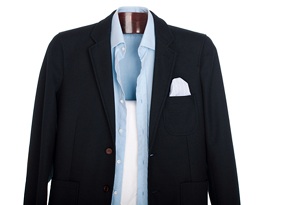 What we wear has a major influence on how people perceive us. It shows our personality and who we are even before we say a word to a person. It instantly tells people our story and creates a lasting first impression.
Spotting Red Flags in a Company During Your Interview
- Written by Alan Carniol
 When you’re looking for a job and see a job posting that you are interested in, it’s only natural to want to know more about the company. After all, you’ll be spending at least 40 hours a week there, so you just want to know that you’ll be in a place that you’ll like.